
Male Engagement
Over the years, through our focused programmatic interventions to end Domestic Violence (DV) and Gender-Based Violence (GBV) in the community, we realized that nearly half of the population…
About this cause
Over the years, through our focused programmatic interventions to end Domestic Violence (DV) and Gender-Based Violence (GBV) in the community, we realized that nearly half of the population — the men and boys — had remained largely unengaged in our efforts. Initially, our outreach was limited to elected PRI representatives and adolescent boys in select schools through school-based sessions. However, as we deepened our understanding, it became clear that sustainable change would not be possible without actively involving men, since they hold a central role in the existing social structure and power dynamics that perpetuate inequality.
Our first attempt was to replicate the same model we had successfully implemented with the women’s cadre. However, this approach did not yield the desired results. We learned that while gender inequality and GBV are issues that directly affect women and girls, they are often not perceived as such by men. The root causes of inequality lie in structural power centers controlled by men, and therefore, transformation must begin there.
Recognizing this, we adopted a new approach focused on identifying and celebrating “positive deviants” — men in the community who demonstrated even small acts of support toward gender equality. These individuals became local role models, showing that men could also be champions of change.
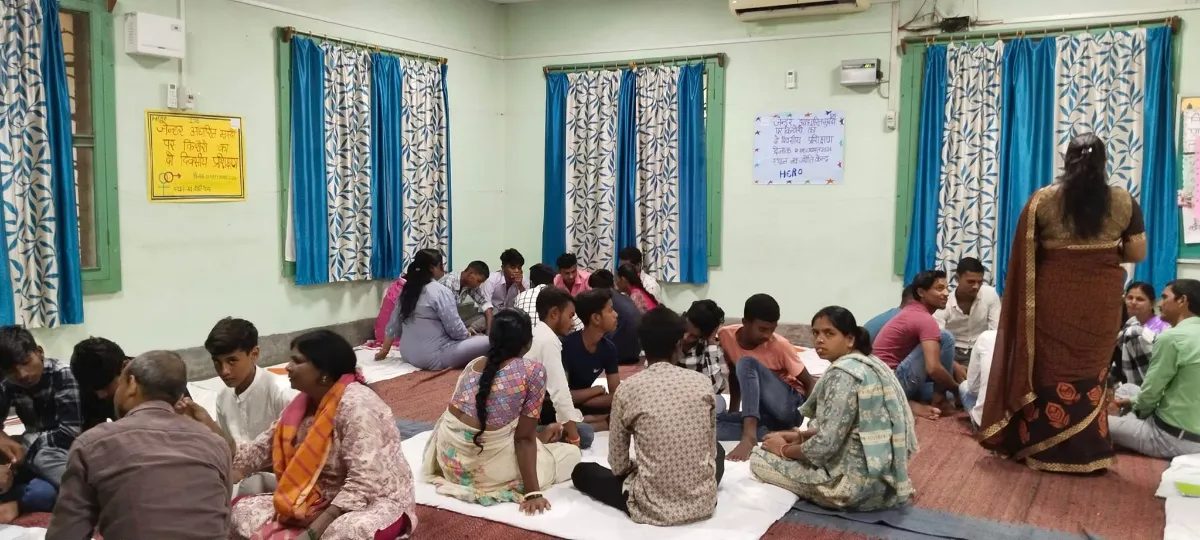
To reach more men — many of whom are often occupied with work or studies — we began organizing one-on-one interactions and small group meetings, scheduling them on Sundays and holidays. We also introduced life skills training for adolescent boys and youth, along with “game swapping” activities designed to help them recognize and challenge gender stereotypes. Gradually, these efforts helped foster a better understanding of gender equality among male participants.
To further deepen community awareness and collective reflection, we introduced Forum Theatre — an interactive method that enables participants to analyze social issues and explore solutions from within. This participatory process encouraged men and boys to envision and decide on the changes they wanted to see, ensuring that transformation came from within the community rather than being imposed from outside.
Today, many men and boys in the community have stepped forward as allies for gender equality. They are not only supporting women and girls but also integrating gender-sensitive practices into their daily lives. Remarkably, many young men who once restricted their sisters from going out now actively encourage them to pursue education, attend training sessions, and participate in community activities. They are supporting their family members in household chores. Earlier, I thought household work was only for women, and I never questioned it. After attending Sahyogi’s sessions, I realized that helping at home is about respect and equality, not gender. Now, I share the household chores with my mother and feel proud knowing that real change starts from our own home.”- Rishu, a youth from Hathiyakandh panchayat, Danapur, Patna.
Through this journey, Sahyogi has learned that true gender equality cannot be achieved without engaging men and boys as partners of change — transforming attitudes, dismantling stereotypes, and building a community where equality becomes a shared responsibility.